Best Robot Vacuums in Australia 2026
Six robot vacuums compared on navigation, brush design and dock, not on the suction number brands print on the box. Dreame, Xiaomi, Lefant and the budget options.
In this guide
- Navigation is the whole product
- The brush decides how it handles hair
- What a self-emptying dock buys you
- The robot vacuums worth buying
- Height, and the part of the floor you never see
- Living with a mapped robot
- What it costs to run
- How we picked
- Does a robot vacuum replace a normal vacuum?
- How much suction do I need?
- Do the mopping functions work?
- Will it get stuck?
Robot vacuum listings lead with suction in pascals, and the figures have climbed from 2,000 to 25,000 in five years without the machines getting twelve times better at cleaning.
Nobody audits the number. A brand measures it at the inlet with no brush, no filter and no dust in the path, and prints the result. What decides whether a robot vacuum earns its place is whether it finishes the house without getting stuck, and whether you have to touch it afterwards.
⚡️ Quick Picks
Navigation is the whole product
A robot vacuum that maps your home cleans it in rows and knows where it has been. One that does not bounces off walls at random, misses a third of the floor and takes an hour longer to do it.
Three approaches ship in Australia. Gyroscope navigation is dead reckoning and drifts, so the robot loses its place and restarts the pattern. Camera navigation reads the ceiling and fails in a dark room. LiDAR spins a laser and builds a real map, works in the dark, and is the one worth buying.
Mapping brings the features people use: no-go zones around the dog bowl, room-by-room cleaning from an app, and a robot that returns to the dock and resumes where it stopped rather than starting again.
The brush decides how it handles hair
Bristle brushes wind long hair into a solid rope around the roller within a fortnight in a house with a dog or anyone with long hair. Cutting it off with scissors is the maintenance task owners give up on, and it is why a working robot vacuum ends up in a cupboard.
Rubber or silicone fin rollers shed hair instead of gripping it. Combination brushes pair stiff bristles for carpet with silicone fins for hard floors, which is what Dreame markets as HyperStream. Check for this before you check the suction figure.
| Floor type | What to prioritise | What to ignore |
|---|---|---|
| Hard floors throughout | Mopping, low profile, fin roller | Peak suction above 6,000Pa |
| Carpet through the house | Carpet boost, bristle and fin combination | Water tank size |
| Pets or long hair | Anti-tangle roller, self-empty dock | Voice assistant support |
| Multi storey | Multi-floor map storage, light body | Auto mop washing on the dock |
A robot vacuum on stairs is a category that does not exist. Plan to carry it.
What a self-emptying dock buys you
The robot holds 300ml to 500ml of dust, which is a couple of runs in a normal house. A self-emptying dock pulls that into a 3L or 4L bag and turns a job you do twice a week into one you do every two months.
Docks that also wash and dry the mop pad go a step further. The washing matters more than it sounds: a mop pad left damp in a dock grows the smell people blame on the floor cleaner. Hot water washing at 70C and warm air drying is the difference between a mop you use and one you remove after a fortnight.
The cost is bench space and consumables. A dock stands about 40cm tall and needs a power point with clearance, and bags run $10 to $15 each.
The robot vacuums worth buying
Every model below clears 4.2 stars on Amazon Australia. Ratings and review counts were checked in March 2026.
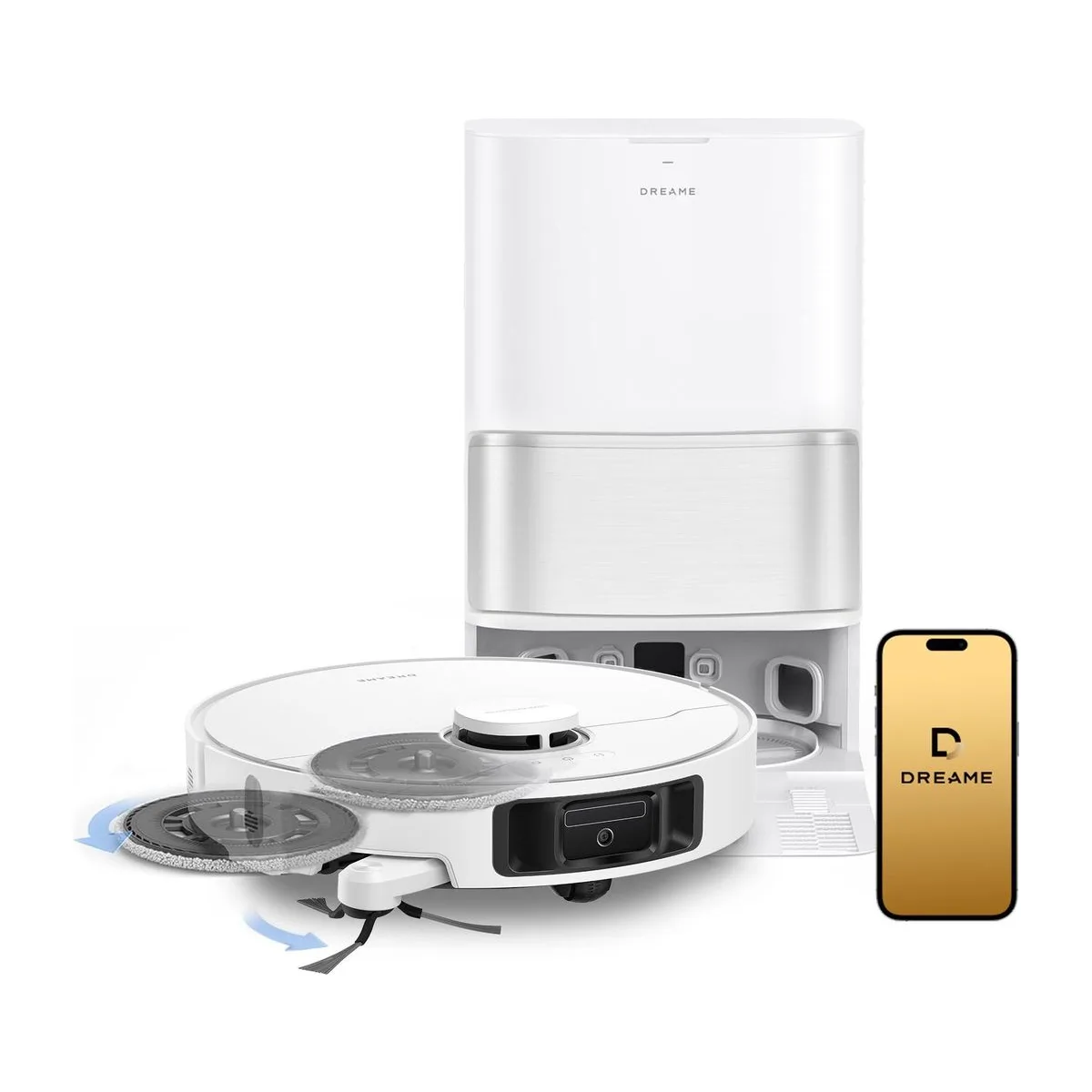
Dreame L10s Ultra Gen3
A 25,000Pa flagship with a self-emptying and mop-washing dock, MopExtend RoboSwing for edges, and SideReach vacuuming into corners.
The Good
- MopExtend swings the mop pad out past the body, the one way a round robot reaches a skirting board
- Dock empties the bin, washes the mop and dries it with warm air
- Highest rating in this group at 4.6 stars
- Handles cat litter and pet hair without wrapping the roller
The Bad
- Costs more than every other model here combined at the low end
- 13.3kg dock needs a permanent home with clearance
- 1,948 ratings is a smaller sample than the budget models
Our Verdict
The one to buy if you want to stop thinking about floors. Edge cleaning and a self-washing mop are the two things cheaper robots get wrong, and this fixes both. Overkill for a one bedroom apartment.
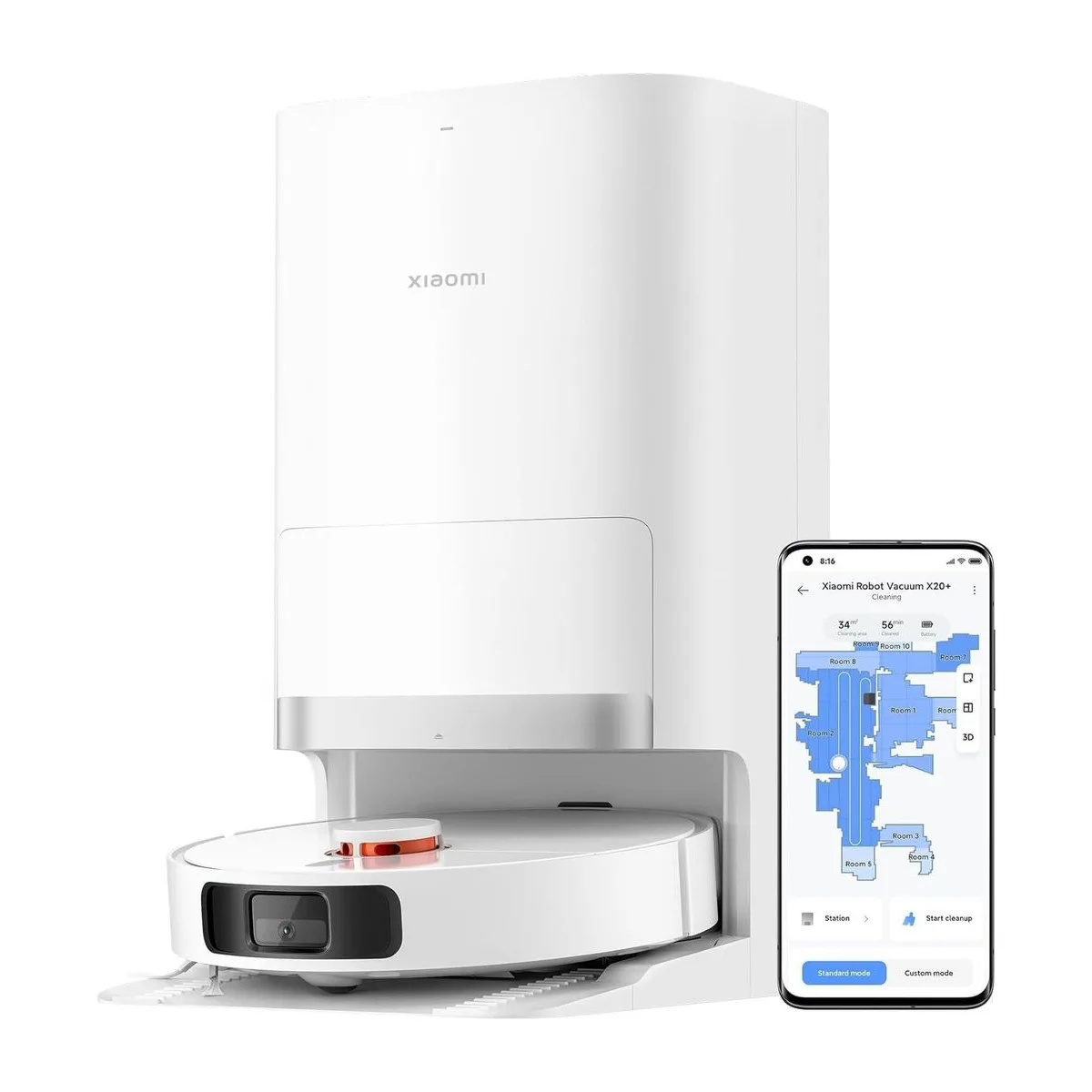
Xiaomi Robot Vacuum X20+
6,000Pa with an all-in-one suction station, high-speed rotating mop and a 4L water tank. Xiaomi's mid-range model and the volume seller in Australia.
The Good
- Suction station empties the 350ml bin in ten seconds and runs 75 days between bag changes
- Rotating mop scrubs rather than dragging a damp cloth
- Xiaomi Home app is the most stable of the Chinese ecosystems
- 4L water tank covers a large home without a refill
The Bad
- 6,000Pa sits well below the Dreame on paper and a little below in practice on carpet
- No mop washing, so you rinse the pad yourself
- Ties you into the Xiaomi app rather than a neutral standard
Our Verdict
The sensible middle. You get the dock that removes the chore and the mapping that makes the robot useful, without the price of a mop-washing station you may not need on hard floors.
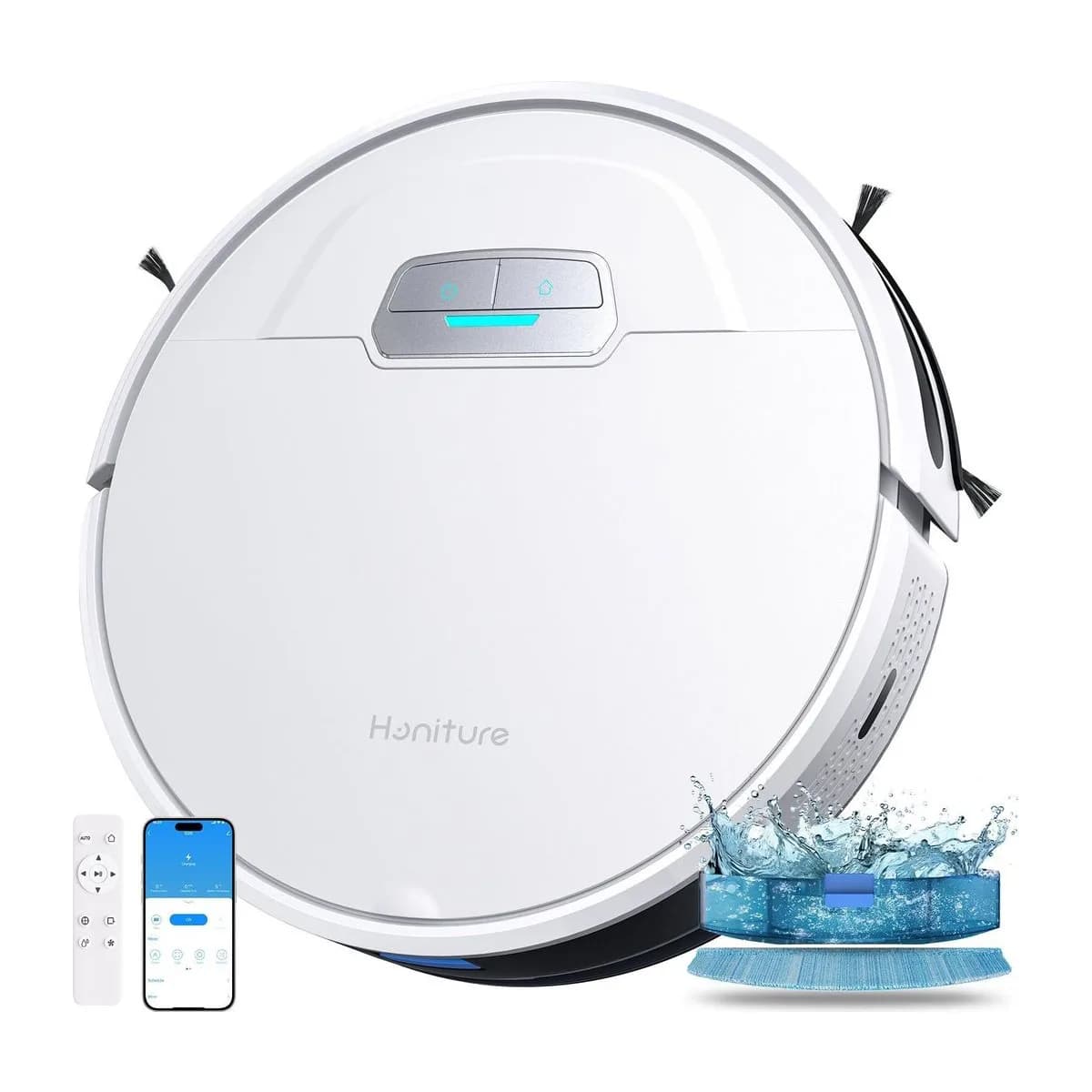
HONITURE G20
4,000Pa in a 7.6cm body with three suction levels, a brushless Japanese NEDC motor and a three in one sweep, vacuum and mop function.
The Good
- 7.6cm height clears low sofas and bed frames that stop taller robots
- 4.4 stars from close to 4,000 buyers, the best rated budget option here
- Brushless motor runs quieter than the geared units at this price
- Removable dust box is easy to empty one handed
The Bad
- No self-emptying dock, so you empty it every second run
- 4,000Pa is the lowest here and shows on deep carpet
- Mopping is a damp cloth dragged behind, not a scrubbing pad
Our Verdict
The pick for a hard-floor apartment on a budget. The low body is the feature that matters day to day, because a robot that fits under the couch cleans the part of the floor you never reach.
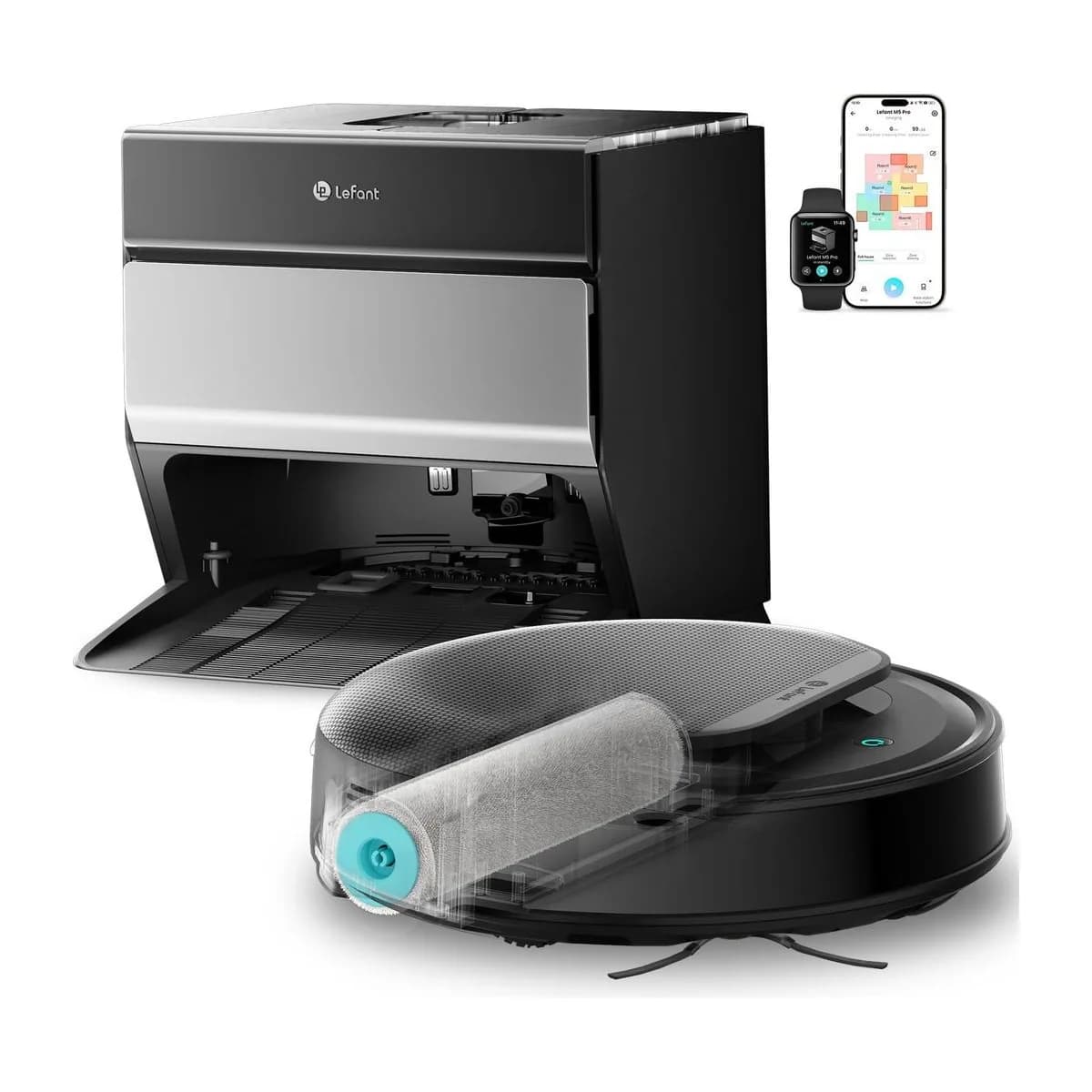
LEFANT M5 Pro
18,000Pa with a self-emptying station, 75C hot water mop roller washing, cold air drying and a 3.2L bag rated to 120 days hands free.
The Good
- Hot water roller washing at 75C, a feature reserved for flagship docks until now
- 120 days between bag changes is the longest interval here
- 18,000Pa handles deep carpet without a carpet boost setting
- Anti-tangle system holds up in a house with a dog
The Bad
- 4.2 stars is the equal lowest rating in this group
- 13.3kg dock is as large as the Dreame at a lower spec elsewhere
- Lefant support in Australia is thinner than Xiaomi or Dreame
Our Verdict
Buy it for the dock. Hot water mop washing at this price undercuts the flagships by several hundred dollars, and the trade is a brand with less local presence if something goes wrong.
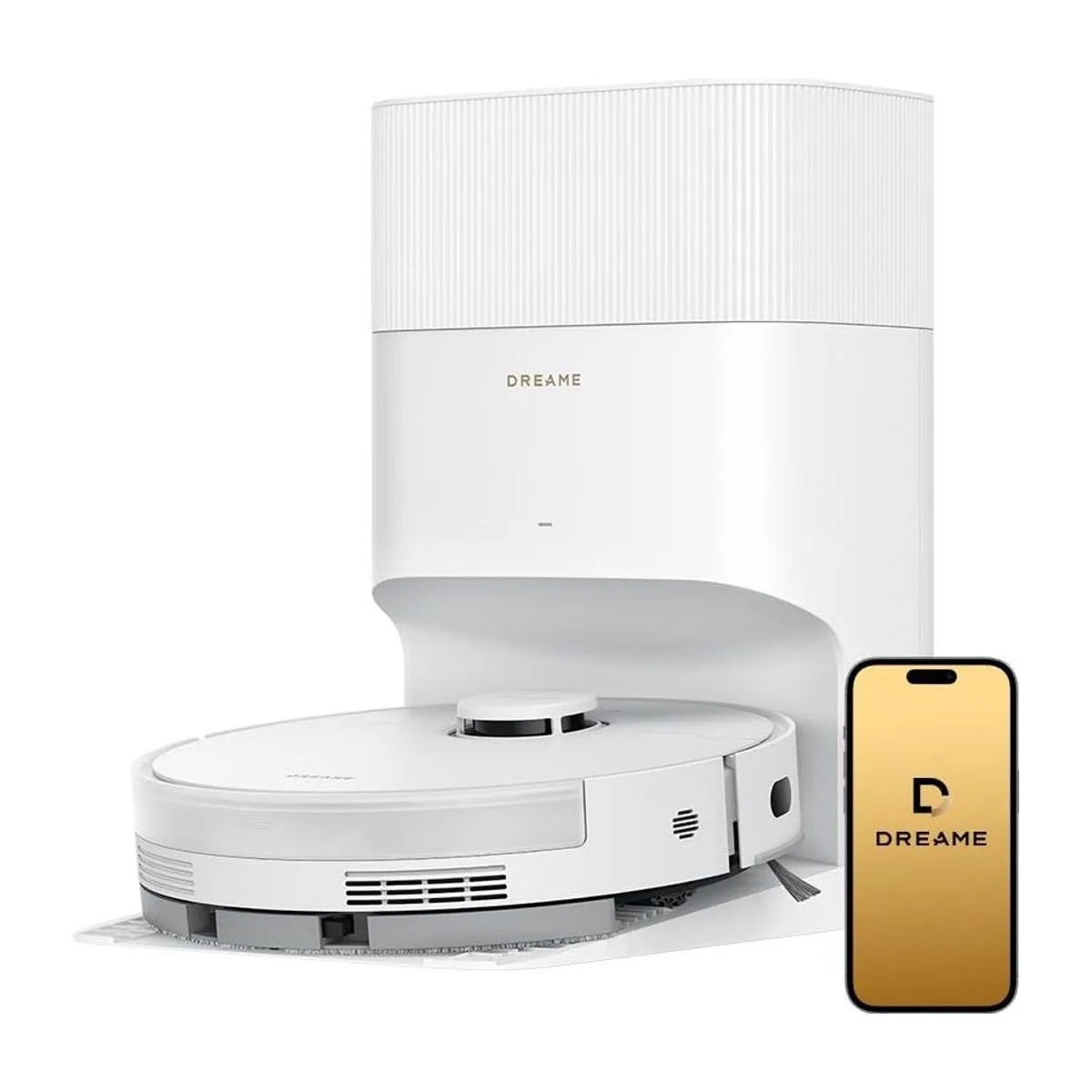
Dreame D20 Plus
13,000Pa with an auto-empty dock, the HyperStream anti-tangle DuoBrush pairing stiff bristles with silicone fins, and 150 days of hands-free operation.
The Good
- DuoBrush is the best anti-tangle design here and the reason to pick it over the Xiaomi
- 150 days hands free is the longest dock interval on the list
- 13,000Pa gives real carpet performance without flagship money
- Same app and mapping as the L10s Ultra
The Bad
- No mop washing, unlike its more expensive sibling
- Mop pad is a flat cloth rather than a rotating pad
- Dock is tall enough to be visible in a small room
Our Verdict
The best value in the Dreame range and the pick for a house with pets. You keep the brush design and the mapping that make the flagship good, and you give up the mop-washing dock.
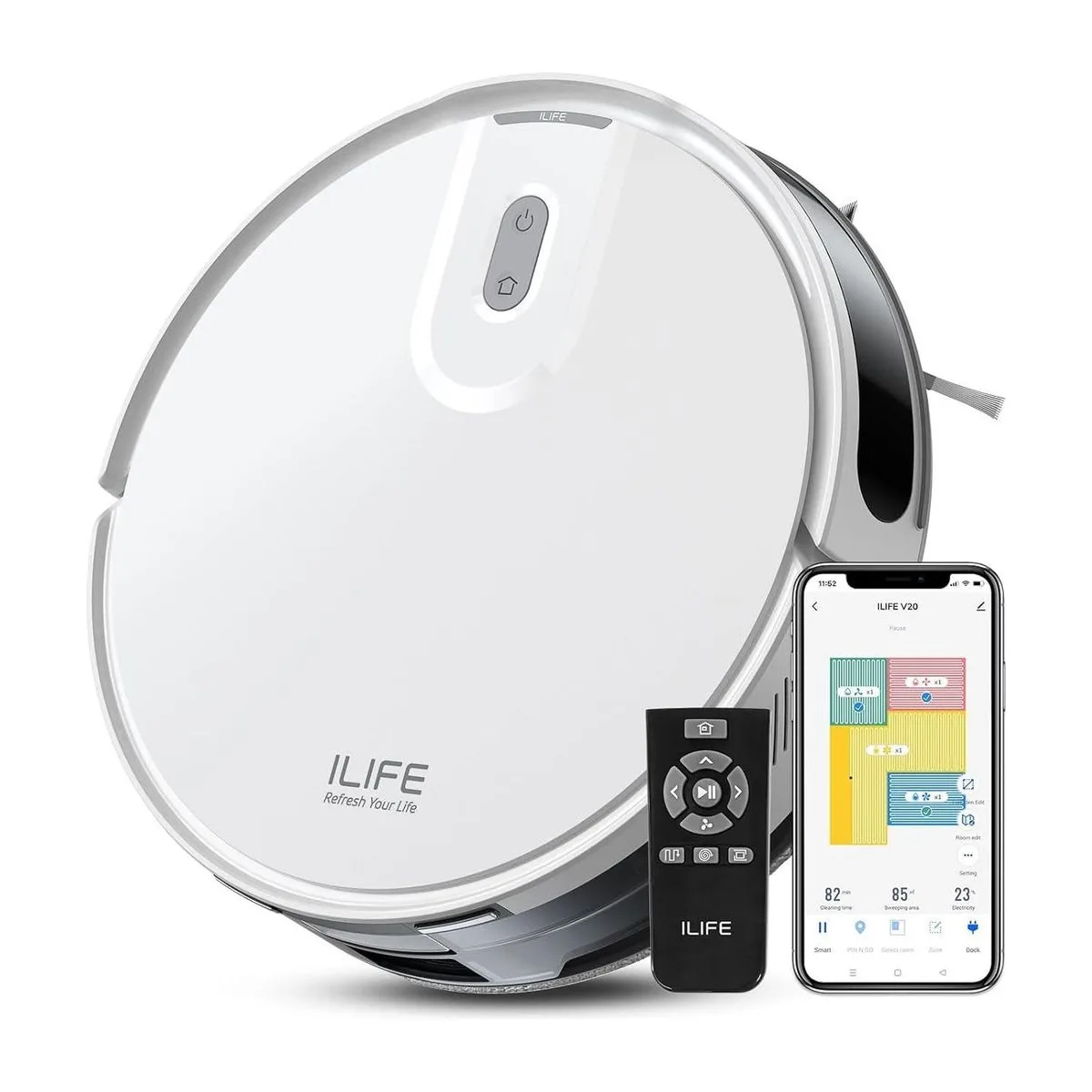
ILIFE V20
5,000Pa with Solid-Fixed laser navigation, a 140 minute runtime and app, Alexa and Google control, at 3.3kg.
The Good
- Real laser navigation at a price where most rivals ship gyroscopes
- 140 minute runtime covers a three bedroom house in one pass
- 3.3kg is light enough to carry upstairs without thinking about it
- 22,500 ratings, the largest sample here by a wide margin
The Bad
- 4.2 stars is the equal lowest average in this group
- No self-emptying dock
- Bristle-led roller tangles in a house with long hair
Our Verdict
The cheapest robot here with navigation worth having. Buy it for a hard-floor home without pets, and step up to the Dreame D20 Plus if anything in your house sheds.
Height, and the part of the floor you never see
The dust that bothers people is under things. A robot that clears 7.6cm gets under most sofas and bed frames sold in Australia. One at 10cm sits on the rail and turns around, which leaves the exact strip of floor a stick vacuum also misses.
Measure before you buy. Lie on the floor with a tape and check the lowest point of the sofa, the bed and the entertainment unit. Two centimetres decides whether the robot cleans the room or the middle of the room.
Living with a mapped robot
The first fortnight is setup. The robot maps the house, you draw no-go zones around cable nests and pet bowls, and you learn which door has to stay open. After that it becomes a schedule you forget about.
Two habits keep it working. Empty or check the dock bag on a calendar rather than when you notice a smell, and pull hair off the side brush once a month. Both take under a minute and both are why one household still uses its robot after two years while another has one in a cupboard.
What it costs to run
A robot vacuum draws 30W to 60W while cleaning, so an hour a day costs under 60c a month at 35c per kilowatt hour. The dock draws more during a self-empty cycle, and that cycle lasts ten seconds.
Consumables are the real cost. Dust bags run $10 to $15 and last two months, filters want replacing twice a year, and side brushes and mop pads wear out. Budget $80 to $150 a year on a docked model.
| Item | Replace every | Cost |
|---|---|---|
| Dust bags | 45 to 75 days | $10 to $15 each |
| Filter | 6 months | $15 to $30 |
| Side brush | 6 to 12 months | $10 to $20 |
| Main roller | 12 months | $25 to $50 |
| Mop pads | 3 to 6 months | $15 to $30 |
Figures are for the models in this guide sold through Australian retailers.
How we picked
Every product below sells on Amazon Australia and clears 4.2 stars from at least 150 buyers. Suction figures are quoted as published and treated as a marketing claim rather than a measurement, because no standard governs how brands test them. Ratings and review counts were captured in March 2026 and move over time, so treat them as a shape rather than a score.
We rank on review volume ahead of star average. A five star rating from eleven buyers tells you less than 4.5 from four thousand, and the listings with a handful of reviews are the ones that vanish a month later.
Properfolio earns a commission when you buy through a link on this page. That commission does not decide what ranks where, and no brand has paid for a position in this guide.
Does a robot vacuum replace a normal vacuum?
No. It replaces the day to day tidy, not the deep clean. Robots cannot do stairs, cannot reach a high shelf, and will not lift ground-in dirt from a rug the way an upright will. What they do is keep the floor at a level where the proper vacuum comes out once a fortnight instead of twice a week.
How much suction do I need?
Above about 4,000Pa the brush and the seal matter more than the fan. A 25,000Pa robot with a bristle roller will lose to a 6,000Pa one with a good fin roller on a floor covered in hair. Treat the number as a rough tier rather than a score.
Do the mopping functions work?
For dust and light marks, yes. A rotating or vibrating pad on a hard floor keeps it looking clean between proper mops. Dried-on spills need a person. Ignore any claim about mopping carpet.
Will it get stuck?
Cables and loose rug fringes cause most stoppages, and both are solvable. Set no-go zones in the app around the cable nest under the desk, and tuck rug fringes under. After a week of adjustments most homes settle into runs that finish without help.
Related Content
About the Author
Properfolio Editorial
Editorial Team
The Properfolio editorial team delivers data-driven financial commentary and consumer insights for everyday Australians.