What Is Controlled Load Electricity?
Controlled load runs hot water and pool pumps on a separate cheaper circuit. Here is what it saves in dollars, how to get it connected, and why a heat pump changes the answer.
In this guide
- How Controlled Load Differs From Peak and Off-Peak
- Controlled Load 1 vs Controlled Load 2
- Which Appliances Run on Controlled Load
- What Controlled Load Costs Across States
- How to Check If You Have Controlled Load
- What it saves in dollars
- Getting it connected
- Solar and heat pumps change the answer
- Should You Keep or Remove Controlled Load
Your electricity bill lists two meters. One covers your lights, appliances, and power points. The other sits under a label like "controlled load" or "CL1." Most households in NSW, Queensland, and South Australia have this second meter, and most households ignore it.
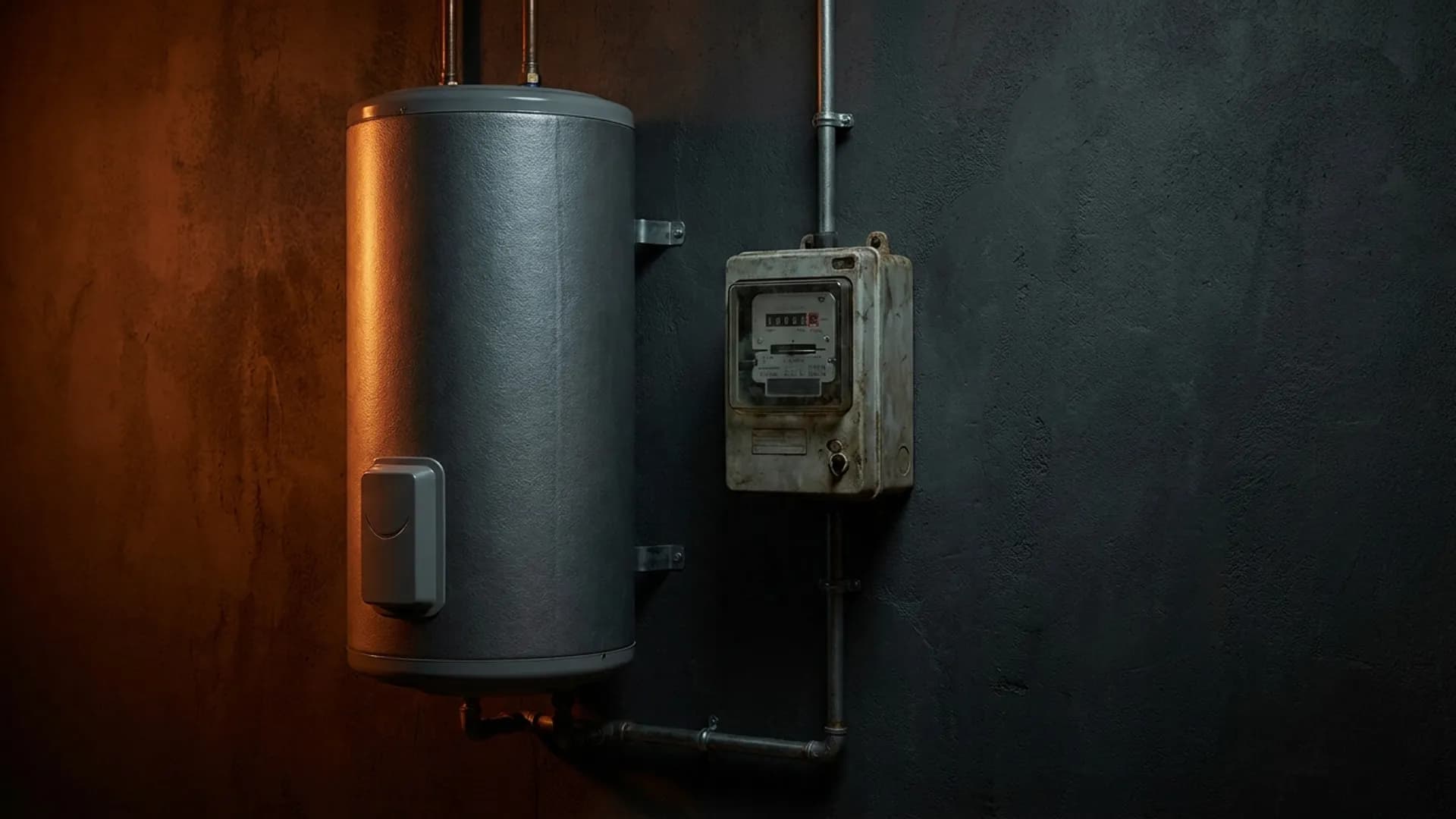
Controlled load electricity feeds a dedicated circuit that your energy distributor switches on and off at set times. The distributor, not you, decides when power flows to that circuit. In exchange for giving up control over timing, you pay a lower rate per kilowatt-hour. Your hot water system is the most common appliance on this circuit. Some households also run pool pumps, slab heating, or battery chargers on controlled load.
Understanding controlled load matters because it affects how you shop for electricity plans, how you size a solar system, and whether you should upgrade your hot water unit. A household that switches from an electric tank to a heat pump without addressing the controlled load meter can end up paying more, not less. Reviewing your internet provider alongside your energy plan can unlock further household savings.
How Controlled Load Differs From Peak and Off-Peak
Off-peak electricity and controlled load electricity both cost less than standard rates. They operate through different mechanisms and serve different purposes.
A time-of-use plan gives you off-peak pricing during certain hours, often 10pm to 7am on weekdays. You choose when to run your dishwasher, washing machine, or dryer during those windows. The meter records usage across all your appliances on the same circuit. You retain control over which appliances run and when.
A controlled load tariff uses a separate meter on a separate circuit. Your distributor, such as Ausgrid in Sydney, Energex in Brisbane, or SA Power Networks in Adelaide, sends a ripple signal through the grid to switch that circuit on. The distributor picks the hours based on network demand. You cannot override the schedule or plug other appliances into the controlled load circuit. The wiring is hardcoded at your switchboard.
The ripple signal technology dates back to the 1950s. Distributors inject a low-frequency electrical pulse onto the power line. A receiver relay at your switchboard detects the pulse and closes the circuit to your hot water system. This system has operated for decades without internet connectivity or smart meter infrastructure.
| Feature | Time-of-Use Off-Peak | Controlled Load |
|---|---|---|
| Who controls timing | You choose when to use power | Distributor switches the circuit on and off |
| Meter setup | Same meter, different rate bands | Separate dedicated meter (NMI suffix) |
| Typical hours | 10pm to 7am weekdays | Varies by distributor, often 8+ hours overnight |
| Appliances covered | Any appliance you run during off-peak | Hot water, pool pump, slab heating only |
| Rate range (2026) | 18c to 25c per kWh | 15c to 22c per kWh |
| Circuit access | All power points on main circuit | Hardwired dedicated circuit only |
| Switching technology | Smart meter with time registers | Ripple signal relay or smart meter register |
Controlled Load 1 vs Controlled Load 2
Most distributors offer two controlled load tariff options. Controlled Load 1 (CL1) gives your appliance around 8 hours of power per day, spread across off-peak periods. These hours cluster between 10pm and 7am, though the distributor can shift them based on grid conditions. Controlled Load 2 (CL2) gives around 18 hours per day, keeping the appliance off during the afternoon peak demand window between 2pm and 8pm.
CL1 costs less per kilowatt-hour because the distributor has more freedom to schedule your usage during the cheapest network periods. CL2 costs more per kilowatt-hour but keeps your hot water heating for longer stretches. A four-person household that burns through hot water by 3pm might need CL2 to reheat the tank before the evening rush. A couple with low daytime hot water demand can save more on CL1.
Ausgrid in Sydney labels these as Controlled Load 1 and Controlled Load 2. Energex in Queensland uses the same naming. SA Power Networks calls them "off-peak" and "evening boost." Essential Energy in regional NSW uses "controlled load off-peak" and "controlled load shoulder." Check your bill or your distributor's tariff schedule for local naming conventions.
Your choice between CL1 and CL2 depends on your tank size and household hot water demand. A 250L tank on CL1 heats overnight and stores enough hot water for a two to three person household through the next day. A 400L tank on CL1 serves a four-person household. If you find yourself running out of hot water in the afternoon on CL1, switching to CL2 solves the problem at the cost of a higher per-kWh rate.
Which Appliances Run on Controlled Load
Electric storage hot water systems make up the vast majority of controlled load connections. These systems heat a tank of water (125L, 250L, or 400L) using a resistive element inside the tank. The element draws between 2.4kW and 4.8kW while heating. A 250L tank serving a three-person household uses about 8 to 12 kWh per day on controlled load. At a CL1 rate of 17c/kWh, that costs $1.36 to $2.04 per day.
Pool pumps qualify for controlled load in most distributor areas. A standard pool pump draws 1kW to 1.5kW and runs 6 to 8 hours per day during summer. Putting it on CL2 (18 hours available) gives the pump enough window to complete its cycle. CL1's 8-hour window works if you have a variable-speed pump that runs longer at lower wattage. Running a pool pump on controlled load instead of peak rate saves $200 to $400 per year depending on your pool size and pump efficiency.
In-slab heating in colder regions like Canberra and parts of Victoria can connect to controlled load. The concrete slab absorbs heat overnight through embedded cables and releases it during the day as passive warmth. Battery storage systems, including Tesla Powerwall units, can charge on controlled load tariffs if a licensed electrician wires the charger to the controlled load circuit. This strategy makes sense when controlled load rates sit well below solar feed-in tariff rates.
Instantaneous (continuous flow) hot water systems do not work on controlled load. These units heat water on demand and need power available at all times. Gas instantaneous systems use gas as fuel and electricity for the ignition and control board. Electric instantaneous systems draw 18kW to 27kW and require a dedicated 3-phase power supply, making them incompatible with controlled load circuits.
What Controlled Load Costs Across States
Controlled load rates vary by state, distributor, and retailer. Our state-by-state electricity rates guide covers both general usage and controlled load pricing in detail. The Australian Energy Regulator (AER) sets the Default Market Offer (DMO) each July, which caps standing offer prices. Most competitive market offers from retailers like Origin, AGL, and EnergyAustralia price controlled load well below the DMO cap. The rates below reflect typical market offers in 2026, not standing offers.
| State | Distributor | CL1 Rate (c/kWh) | CL2 Rate (c/kWh) | Daily Supply Charge |
|---|---|---|---|---|
| NSW | Ausgrid | 15.5c to 19c | 20c to 24c | Nil to 30c/day |
| NSW | Endeavour Energy | 16c to 20c | 21c to 25c | Nil to 35c/day |
| NSW | Essential Energy | 15c to 19c | 19c to 23c | Nil to 30c/day |
| QLD | Energex | 16c to 21c | 19c to 24c | Nil to 25c/day |
| QLD | Ergon Energy | 15c to 20c | 18c to 23c | Nil to 25c/day |
| SA | SA Power Networks | 17c to 22c | 22c to 27c | 20c to 40c/day |
| ACT | Evoenergy | 14c to 18c | 18c to 22c | Nil to 20c/day |
Victoria and Tasmania do not use traditional controlled load tariffs. Victorian distributors moved most households to time-of-use metering after the smart meter rollout completed in 2014. If you live in Victoria with an older meter and a dedicated hot water circuit, you may still have a controlled load arrangement, but this is uncommon. Contact your distributor (CitiPower, Powercor, Jemena, AusNet, or United Energy) to confirm your metering setup.
The daily supply charge is an often-overlooked cost. Some retailers charge $0 daily supply for the controlled load meter, folding the cost into the per-kWh rate. Others charge 20c to 40c per day. On a 365-day year, a 35c daily supply charge adds $127.75 to your annual bill. When comparing energy plans, check the controlled load daily supply charge alongside the per-kWh rate.
How to Check If You Have Controlled Load
Pull up your latest electricity bill. Look for a second line item under "usage charges" with a label like "controlled load," "off-peak hot water," "CL1," or "dedicated circuit." The rate will be lower than your general usage rate. Some retailers list it as a separate NMI (National Metering Identifier) or a suffix on your main NMI. A bill showing two NMIs or two sets of usage charges confirms a controlled load arrangement.
You can also check your meter box. A controlled load setup has two meters, or a single smart meter with two registers. The controlled load circuit connects through a separate breaker in your switchboard, often labelled "HWS" (hot water system) or "CL." An electrician can identify which breaker feeds the controlled load circuit and which appliance sits on it. The controlled load breaker will be in a different section of the switchboard from your general power breakers.
If you rent and your bill shows controlled load charges, your hot water system runs on that circuit. You cannot change the tariff arrangement without your landlord's approval, since the distributor controls the meter configuration. Renters who want to understand their controlled load usage should request a detailed usage breakdown from their retailer, which shows daily consumption patterns on the controlled load meter.
Some energy comparison websites (like Energy Made Easy, the AER's comparison tool) separate general usage and controlled load usage when estimating annual costs. Enter both your general usage and controlled load usage figures to get accurate plan comparisons. Using only your general usage figure will produce misleading cost estimates. For a full review of one of Australia's largest retailers, read our Origin Energy plans and pricing review.
What it saves in dollars
The rate difference is the whole argument, so it is worth attaching to a real appliance. An electric storage hot water system for a family of four draws around 3.6kW and runs roughly three hours a day, which is about 3,900 kWh a year.
| Tariff | Rate | Annual cost to heat the water | Difference |
|---|---|---|---|
| Peak, general usage | 33c per kWh | About $1,290 | |
| Controlled load 1, overnight | 18c per kWh | About $700 | Saves about $590 |
| Controlled load 2, longer window | 22c per kWh | About $860 | Saves about $430 |
A 3.6kW electric storage system consuming about 3,900 kWh a year. Rates vary by network and retailer, so substitute your own.
Five to six hundred dollars a year for a wiring arrangement you never think about again is among the better returns available on a household bill. The saving scales with usage, so a larger household saves more and a single person in a flat with an instantaneous electric system saves nothing, because there is no storage tank to heat overnight.
Getting it connected
Controlled load needs a separate circuit and a meter configuration that records it apart from your general usage. New homes with electric storage hot water are usually wired for it from the start. Older homes, and any home where a previous owner replaced a system, often are not.
The path runs through your retailer rather than the network directly. Ask them to arrange a meter reconfiguration, which they lodge with the distributor. Where the wiring already exists, this is a metering change costing nothing to a few hundred dollars. Where it does not, an electrician has to run the circuit first, which is the larger part of the bill.
| Situation | What is needed | Rough cost |
|---|---|---|
| Wired for it, meter not configured | Retailer lodges a meter reconfiguration | $0 to $300 |
| Smart meter already installed | Remote reconfiguration in most networks | Often $0 |
| Old meter, no smart meter | Meter exchange plus configuration | $0 to $400, often free with a plan change |
| No separate circuit | Electrician runs the circuit, then reconfigure | $400 to $1,200 |
At a $590 annual saving, even the worst case pays for itself inside two years and every year after that is clear. Ask the electrician to quote the circuit separately from the meter work so you can see which part you are paying for.
Solar and heat pumps change the answer
Controlled load and rooftop solar work against each other. Controlled load heats overnight when your panels produce nothing, so you buy every kilowatt hour from the grid at the controlled rate while exporting your own generation during the day for a feed-in tariff that has fallen to a few cents in most states.
A household with solar is usually better off heating water in the middle of the day using its own generation, which costs nothing, rather than overnight at 18c. Doing that means moving off controlled load and onto a timer, and the switch is worth several hundred dollars a year against a low feed-in tariff.
Heat pump hot water systems shift the calculation again. A heat pump uses roughly a third of the electricity of a resistive element for the same hot water, so the saving from a cheaper tariff shrinks with the consumption it applies to. Combine a heat pump with daytime solar and the running cost approaches nothing, at which point the controlled load circuit is solving a problem you no longer have.
Work out which system you have before optimising the tariff. A resistive element with no solar is the clear case for controlled load. A heat pump under a full solar array is the clear case against it, and most households sit somewhere between.
Should You Keep or Remove Controlled Load
Controlled load saves money when you heat water with an electric storage tank. A 250L tank on CL1 at 17c/kWh costs about $620 per year. The same tank on a flat-rate tariff at 33c/kWh costs about $1,200 per year. That gap of $580 per year makes controlled load worth keeping for electric storage hot water. Over the 10 to 15 year lifespan of a tank, the savings add up to $5,800 to $8,700.
If you switch from an electric storage tank to a heat pump hot water system, the economics shift. Heat pumps use a compressor and refrigerant to extract heat from ambient air. They consume about one-third the electricity of a resistive element. A heat pump on controlled load uses so little power (3 to 5 kWh/day instead of 10 to 12 kWh/day) that the daily supply charge for the controlled load meter can wipe out the savings from the lower rate. Many heat pump owners disconnect the controlled load meter and run the unit on their main supply.
Solar panel owners face a similar calculation. If your solar system generates enough daytime power to heat water, running the tank during the day on free solar electricity beats a controlled load rate that heats water overnight. A timer or solar diverter (like a Catch Power or Solar Analytics device) shifts your hot water heating to midday hours when solar output peaks. A 5kW solar system in Sydney produces 18 to 22 kWh/day in summer, more than enough to run a hot water tank and power the house.
The decision tree looks like this. If you have an electric storage tank and no solar panels, keep controlled load. If you have an electric storage tank with solar panels, consider a timer to heat water during solar hours and remove controlled load. If you have a heat pump, remove the controlled load meter and run on your main supply. If you have a gas hot water system, you should not have a controlled load meter at all.
To remove a controlled load meter, contact your distributor and request a meter reconfiguration. Ausgrid charges around $200 to $300 for a site visit to rewire the hot water circuit onto the main supply. Your electrician will need to move the hot water breaker from the controlled load section to the main section of your switchboard. The process takes 2 to 4 weeks from request to completion. Once removed, your hot water usage appears on your general supply meter and gets charged at your standard tariff rate.
Compare Electricity Plans
Find the best electricity plan for your usage pattern. Compare rates, including controlled load tariffs.
Compare Energy PlansRelated Content
About the Author
Properfolio Editorial
Editorial Team
The Properfolio editorial team delivers data-driven financial commentary and consumer insights for everyday Australians.